Platforms
What is a headless CMS?
Traditional CMS architectures used to be the norm in web development. Today, organizations are looking for the flexibility and scalability that headless CMS solutions provide.
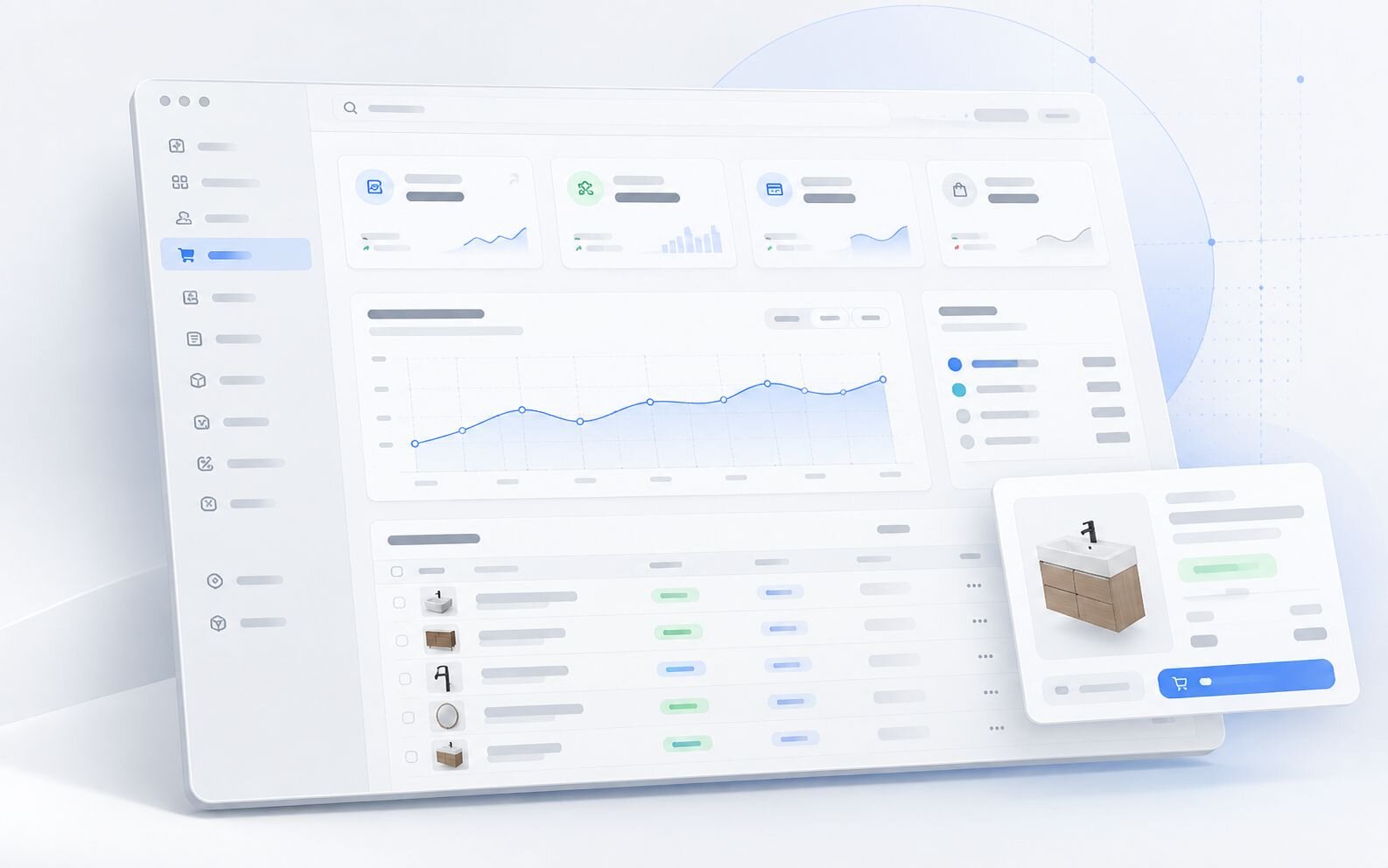
Headless CMS: a CMS without a “head”
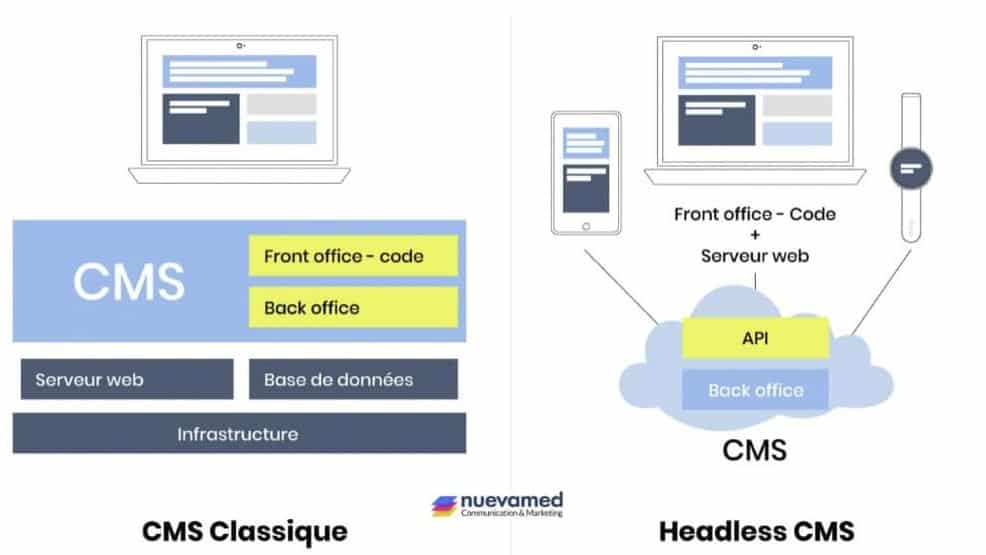
WordPress, for example, provides an admin interface where editors manage the site’s content, along with the means to display that content to visitors through a theme. Themes can be heavily customized or built from scratch, but they remain tightly bound to WordPress and to the way it stores its data.
Traditional CMSs are often described as “monolithic”: large and powerful, but slow to evolve. In recent years, they have gradually given way to a “headless” model. Here is what that model is and what it offers.
1. Your content is not tied to your website
A well-designed headless CMS can store content for a wide range of channels, not only digital ones. You manage content for any product or service (apps, websites or even print) from a single place.
2. The right technology
If your CMS only handles content, you are free to choose whatever technology you want to build the front end. You can take advantage of advanced frameworks like React to create animations and rich user experiences.
3. Future-proof
No need to rebuild your entire site. When it is time to give your website a new look, you don’t have to start from scratch: you keep your CMS and rebuild the front end. No content migration, no data loss.
4. Better performance
With a traditional CMS, pages are generated on demand when a user visits the site. By decoupling the CMS from the front end, you can prebuild your pages and deliver them through a CDN for extra speed. That is great news for your site’s Core Web Vitals, and therefore for its search rankings.
In other words, the page is already built when the user requests it. And to reduce time to first byte (TTFB), nothing beats prebuilt files served as close to the user as possible.
5. Stronger security
By separating the back end from the front end, you reduce your site’s attack surface: the admin interface is no longer directly exposed to visitors. Pregenerating your pages reduces that risk even further.
Is headless the right choice?
Headless content management is not ideal for everyone. It takes time to set up and can be costly. If you don’t get a concrete benefit from it, it may not be the right solution.
We recommend a headless solution if you have:
- several channels, such as websites and apps;
- complex integration or animation needs;
- site performance that needs to improve.
If any of these situations sounds familiar, our team can help you determine whether a headless CMS is the right approach for your brand.
Comparing the most popular headless CMSs
Contentful
Contentful is one of the most widely used headless CMSs. API-first, it is particularly well suited to omnichannel content. Because it is content-centric rather than page-centric, you organize and structure content in the way that works best for your team, with a custom content model instead of fixed templates.
Strapi
Strapi is an open-source headless CMS built on Node.js. Written entirely in JavaScript, it is designed with developers in mind. It supports both GraphQL and REST APIs.
Ghost
Ghost exposes a RESTful JSON API, with a separate admin and front end. It ships with a default Handlebars.js front end to get started quickly, along with detailed documentation for using the API directly or through the provided SDKs.
Forestry (now TinaCMS)
Forestry was valued for its clean interface, built around the editing experience. The service shut down in 2023, and its team now recommends TinaCMS, which carries that simple editing approach forward for file-based sites.
Sanity
Sanity is a real-time headless CMS that you customize with JavaScript and React. It is a CMS we enjoy working with at Nuevamed. Its main strength: it treats “content as data.” Content is stored according to its properties rather than its presentation, which encourages reuse and makes life easier for designers, editors and developers.
Headless WordPress
Headless WordPress is a popular approach, largely because WordPress dominates the CMS market. Many editors already know its interface, so their day-to-day work changes very little. You manage your content in WordPress while publishing it to a custom front end through APIs such as WPGraphQL.
Headless Drupal
With a headless approach, Drupal becomes a back-end system for managing content centrally and publishing it across several channels. Decoupling the front end from the back end offers more flexibility and greater control over the user experience.
ButterCMS
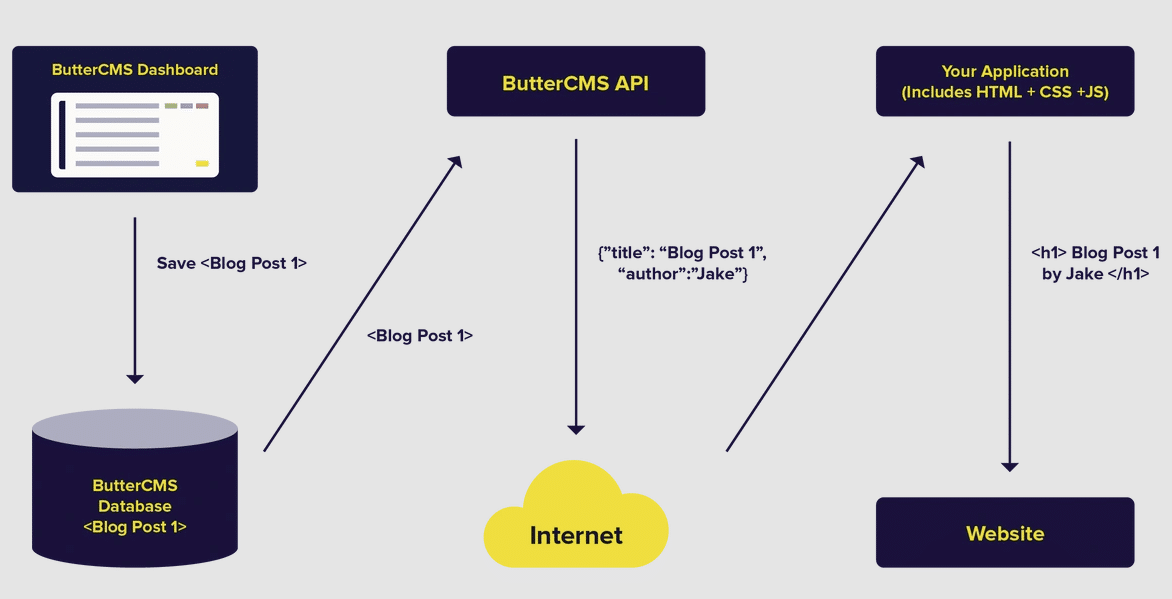
ButterCMS is a fully headless, API-first CMS that connects to front ends built with any technology. It offers client libraries and starter kits to simplify integrations, including with Angular, React, Next.js and Gatsby.
Why choose Nuevamed for your headless CMS in Montreal?
At Nuevamed, we design content platforms optimized for search and performance, build scalable websites and integrate the systems that streamline business processes.
We work with Sanity, Strapi and Contentful, among others. With an iterative approach and reusable technical solutions, we aim for a seamless integration.
We offer technical audits, consulting and end-to-end integration projects, whether you are migrating or starting fresh. To see how a headless CMS can improve your operational efficiency, contact us.
Related expertise
Explore the expertiseFacing a similar challenge in your organization?
Discuss your project