Development
Catastrophe claims surges: how to absorb the peak without doubling your team
Twenty minutes of hail over a major city is all it takes. By the next morning, the contact centre is jammed. Adjusters head into the field with incomplete files, policyholders call three times for a status update, and managers spend their day reassigning cases instead of settling them. In Canada, this cycle now returns every year with greater force.

Here is where claims operations actually break under surge volume, how well-prepared insurers decouple processing capacity from headcount, and which module to deploy first before next season.
Surge volume has reset the operational baseline
Weather losses have shifted scale. For 2024, the Insurance Bureau of Canada reported a record $8.5 billion in insured severe-weather losses across Canada. Over just five summer weeks, floods, wildfires, and hail generated roughly 250,000 claims, straining claims departments nationwide.
A calmer year does not reverse that trajectory. Although 2025 losses were lower, catastrophe-related insured losses from 2016 to 2025 nearly tripled compared with the prior decade, while average claim counts nearly doubled. The March 2025 ice storm in Ontario and Québec alone accounted for about one-fifth of the year's insured losses.
Staffing a claims department for an average year leaves little room to absorb a surge. Operational resilience depends on the digital architecture absorbing the spike.
Where operations break during a surge
When claim volume jumps tenfold, the bottleneck is rarely adjuster headcount. It is the administrative friction surrounding them.
Phone lines absorb basic data entry
When first notice of loss (FNOL) still runs through the contact centre, agents spend long minutes typing information policyholders already have: address, date, damage type, photos. Wait times spike, and frustrated clients vent on social media or switch carriers at renewal.
No triage at intake
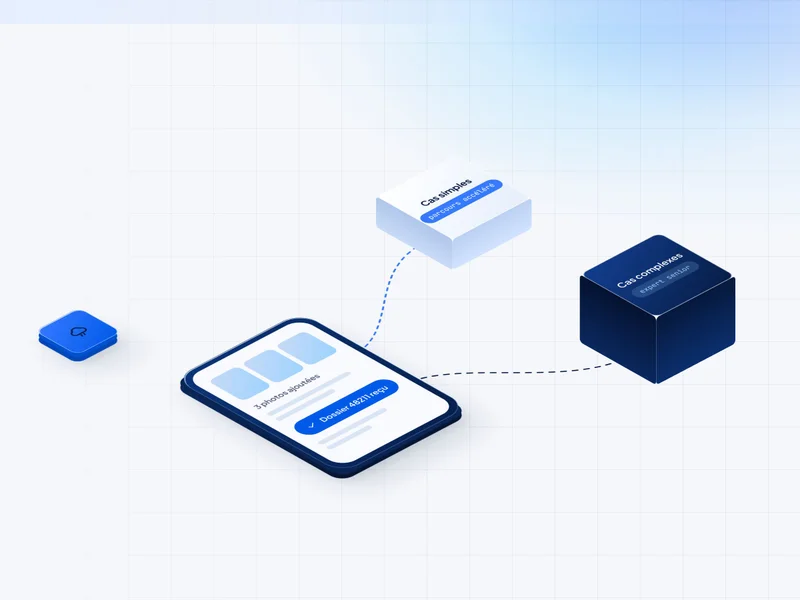
A minor basement leak and an uninhabitable home require different adjusters and timelines. Without intake routing, straightforward files clog senior adjusters' queues while severe losses wait behind them.
Incomplete files on site
Adjusters arrive without usable photos, receipts, or policy history. Every missing detail triggers a callback or second visit, adding days to settlement.
Status calls jam the queue
During a catastrophe, a large share of inbound calls comes from policyholders asking for a simple status update. Without automated notifications, every status inquiry blocks a line needed for a new claim.
Five architectural levers to absorb surge volume
1. Digital FNOL built for real-world conditions
A claim intake portal must work on a mobile phone, inside a damaged home, sometimes over a weak connection. That requires short forms, direct photo uploads from the camera roll, instant confirmation with a claim number, and save-and-resume support. Routine claims can stay off the phone lines.
2. Automated triage at intake
Each claim is routed on arrival using clear business rules: damage type, preliminary estimate, habitability, vulnerable occupants, and active coverage. Simple files move to a fast track (often settled remotely from photos), while complex losses go straight to experienced adjusters.
3. AI-assembled files before the adjuster steps in
Artificial intelligence delivers its highest return when it prepares the file upstream. It prompts policyholders for missing documents, pulls relevant policy clauses, flags potential inconsistencies between photos and statements, and produces a sourced summary. The adjuster opens a file ready for assessment and keeps full authority over the settlement decision. That's why a human in the loop must see the sources.
4. Automated status updates tied to real milestones
Every status change in the system (claim received, adjuster assigned, visit scheduled, offer issued) triggers an email or SMS update and reflects in the policyholder portal. This reduces inbound status calls when contact centres are under peak load.
5. Ready-to-use surge portals for external adjusters
When insurers bring in independent adjusters or out-of-region teams, the first few days are often lost to provisioning access and tool training. A dedicated adjuster portal with preconfigured roles and permissions—designed to meet applicable Canadian and Québec privacy requirements, including Law 25—can help external teams get to work on day one.
Should you replace the core system?
Rarely as a first move. Most insurers run a long-standing policy and claims core system that is reliable but rigid. Replacing it takes years and does nothing for next season's surge.
A faster, lower-risk path is to decouple intake and automation around the existing core. The legacy system remains the source of truth for policies and payouts, while an API-connected layer handles digital FNOL, triage, AI file preparation, and policyholder communications. Explore our cloud and API integrations.
| Approach | Indicative time to results | Risk | Best fit |
|---|---|---|---|
| Full core system replacement | Several years | High | End-of-life system with no vendor support |
| Decoupled layer around existing core | A few months per module, depending on scope | Low to moderate | Reliable but rigid core, urgent capacity need |
| Hybrid approach | Progressive | Moderate | Planned modernization, module-by-module rollout |
Where to start before next season
- Audit your last surge with four metrics. Track time to first contact, share of phone-based FNOL, share of status calls, and average settlement time for simple claims. Those four numbers expose the primary bottleneck.
- Launch one targeted module first. Digital intake paired with automated status updates relieves the contact centre fastest.
- Define triage rules with your adjusters. They know which signals separate a straightforward claim from one likely to escalate.
- Add AI assistance once the digital flow is live. AI performs far more reliably on structured intake data than on scattered phone notes.
FAQ
How long does it take to launch digital claim intake?
An initial intake flow with photo uploads and automated status updates can launch within a few months when the core system's APIs are available. The timeline depends on scope and integration complexity.
Can AI settle claims on its own?
It can assemble the file, request missing details, and draft an assessment for straightforward, low-severity claims. For complex, high-value, or disputed files, the settlement decision must remain with an adjuster.
Does self-service increase fraud risk?
Properly designed digital intake supports fraud checks: identity verification, photo metadata checks, date consistency, and policy history cross-referencing. Structured data makes these checks easier to automate than manual phone notes.
Does this architecture fit mutuals and mid-sized insurers?
Yes. A lean claims team cannot double headcount in 48 hours; a decoupled digital layer helps it handle higher volumes while keeping control of service quality.
Moving to architecture
Claims surges test your architecture, not just your headcount. Moving intake, initial triage, and status updates to an API-connected layer gives your adjusters back the time to assess, decide, and support policyholders when it matters.
Founded in 2011, Nuevamed engineers claims intake portals, triage engines, and AI assistants connected to insurers' existing core systems under strict data governance.
Facing a similar challenge in your organization?
Discuss your project