Development
Real-time payments in Canada: what the Real-Time Rail changes in your systems
On November 9, 2026, Payments Canada launched the Real-Time Rail (RTR). Participating banks, credit unions, and payment service providers can now exchange, clear, and settle funds in seconds, around the clock, including weekends.

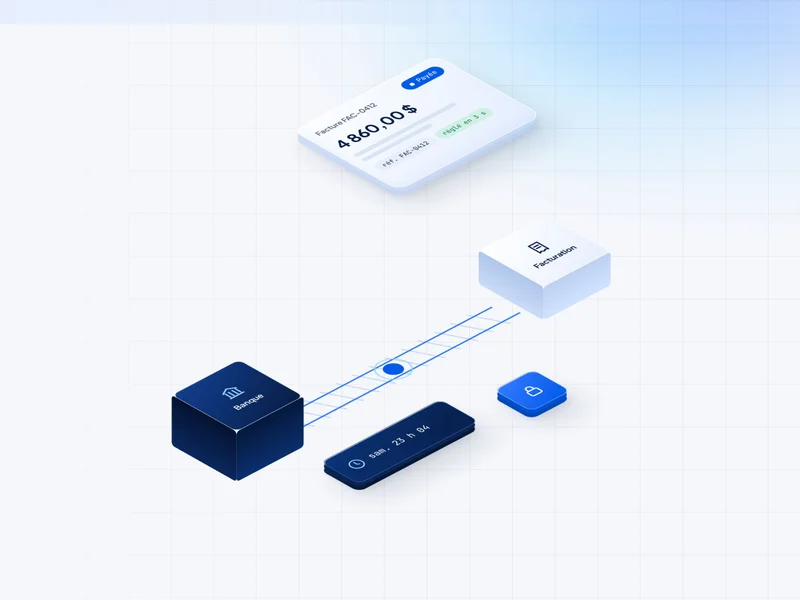
For most Canadian businesses, access will roll out in stages through their bank or payment provider. That transition gives finance leaders, fintech product teams, and companies running custom billing platforms time to fix what instant settlement will expose: accounting and software workflows still built around overnight batches and 24-to-48-hour clearing windows.
What the Real-Time Rail actually changes under the hood
Owned and operated by Payments Canada, the Real-Time Rail handles real-time exchange, clearing, and irrevocable settlement 365 days a year. The ISO 20022 messaging standard lets transactions carry structured remittance data (invoice number, customer ID, order reference) alongside the funds.
Two factors distinguish this launch. Canada is the first G7 country to deploy a real-time payment rail with mandatory centralized fraud mitigation services from day one. Payments Canada research shows that three in five businesses surveyed would use real-time payments to send or receive money in certain situations.
Phased rollout: who gets access and when
Eight participants connected at launch. As The Logic reported, access is rolling out in phases. Payments Canada is targeting coverage of more than nine in ten Canadian bank accounts by Q3 2027. That is not a guaranteed availability date for all business customers.
Businesses access the Real-Time Rail through their financial institution or a participating payment service provider, which packages its own instant transfers, collections, and APIs. Before writing a single line of code, ask your bank two questions: which rollout phase are you in, and which APIs will be available to commercial clients?
Five architectural adjustments to plan now
Settlement in seconds collides directly with software designed for overnight batch files. These are the five pressure points that surface most often when auditing a billing platform or ERP integration.
1. Replace overnight batches with real-time webhooks
Many systems still assume a payment collected today will post tomorrow morning after an overnight sync. On the RTR, customers expect an invoice to switch to "Paid" while they are still on the screen. Your backend needs an event-driven model: ingesting webhooks from your payment provider, enforcing idempotency (so duplicate notifications never post twice), and updating the invoice, customer ledger, and order or service access as soon as payment is confirmed.
2. Use ISO 20022 data to automate bank reconciliation
For finance teams, automated reconciliation is the clearest operational win. Structured ISO 20022 fields allow your software to match incoming payments to open invoices inside your ERP (such as Sage 50 or Microsoft Dynamics 365). That only works if your invoices carry a unique, standardized reference, your customers include it, and your integration parses those fields cleanly. Without reference discipline, your team will keep reconciling manually even on an instant rail.
3. Redesign business rules for 24/7 settlement
A payment arriving Saturday at 11 p.m. can settle that same Saturday at 11 p.m. Workflows tied to business days—outgoing payment approvals, treasury controls, period cutoffs, customer notices—need updating. Decide now who can approve an urgent weekend supplier payout, up to what limit, and how that approval will be recorded.
4. Move outgoing fraud controls ahead of the API call
Real-Time Rail settlement is immediate and final. You cannot correct a wrong payee or compromised supplier account by cancelling the transfer the next morning. Centralized network fraud checks do not replace internal safeguards: verifying supplier banking details, enforcing dual approval above defined thresholds, and putting payments on hold and alerting your team whenever a supplier changes deposit accounts. Run these checks before the API call that initiates the payment.
5. Keep your cash position up to date
Immediate collections make real-time cash positioning possible. That advantage disappears if your treasury dashboard still relies on daily manual bank statement imports. Live cash visibility requires direct synchronization between incoming payment events and your financial reporting layer.
Where open banking fits in
Canada's open banking framework is advancing on a parallel track. The Consumer-Driven Banking Act received Royal Assent in March 2026, and draft regulations appeared in the Canada Gazette on June 27, 2026 (Flinks analysis). Phase one is planned to cover read-only data access under Bank of Canada supervision. The source does not give an official launch date.
For fintechs and SaaS platforms, the two initiatives complement each other: open banking provides consented access to account data, while the Real-Time Rail moves money instantly. Building decoupled API connectors, auditable consent tracking, and real-time transaction states now avoids rebuilding the same plumbing twice.
Where to start right now
- Confirm your bank or payment provider's roadmap. Ask which phase they join the Real-Time Rail, which commercial products they are launching, and when sandbox API documentation (webhooks and ISO 20022 fields) will be available.
- Audit your billing chain end to end. Identify overnight batch jobs, manual CSV exports, and non-standard invoice reference formats.
- Tighten outgoing payment controls. Before enabling instant payouts, enforce dual-approval thresholds and supplier bank-account verification workflows.
FAQ
Does my business need to connect directly to the Real-Time Rail?
No. Access runs through your financial institution or a participating payment service provider. Your work is integrating your internal systems with the APIs and webhooks that partner exposes.
When will I be able to receive instant payments?
Timing depends on your bank or payment provider's rollout phase and when it makes the service available to business customers.
Do instant payments replace Interac or existing transfers?
They operate alongside existing payment options. Each institution decides which products to offer on the Real-Time Rail and when to release them to business clients.
What needs to change in invoicing software to support the RTR?
Three updates come up consistently: processing real-time payment webhooks with idempotency, standardizing invoice references to leverage ISO 20022 data for automated reconciliation, and updating approval workflows for 24/7 operation.
Preparing your billing architecture
Nuevamed engineers invoicing, payment, and ERP integration platforms for Canadian businesses, and operates BillPRO, our own billing software. If you want to map what the Real-Time Rail means for your stack, we can audit your current workflow from invoice issuance to bank reconciliation.
Facing a similar challenge in your organization?
Discuss your project